North America : Market Leader in Innovation
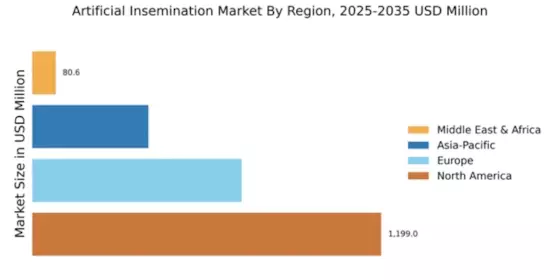
North America leads in the Artificial Insemination Market Size, accounting for over 50% of the global revenue in 2024. The region's growth is driven by advanced agricultural practices, increasing livestock productivity, and a strong focus on genetic improvement. Regulatory support from agencies like the USDA enhances the adoption of artificial insemination technologies, ensuring compliance with health and safety standards.
- CDC and USDA-supported data indicate the U.S. produces over 12 million tonnes of beef annually and more than 100 million tonnes of milk, while WHO highlights advanced veterinary infrastructure, supporting widespread adoption of artificial insemination technologies across North America.
Reference:
The competitive landscape is robust, with key players such as Zoetis Inc., Merck Animal Health, and Genus PLC leading the market. The U.S. and Canada are the primary contributors, leveraging technological advancements and research initiatives. The presence of established companies fosters innovation, while collaborations with research institutions further enhance market dynamics.
Europe : Emerging Market with Growth Potential
Europe Artificial Insemination Market size was valued at USD 719.39 million in 2024, making it the second-largest regional market with a 30% share. The region benefits from stringent regulations that promote animal welfare and food safety, driving the adoption of artificial insemination techniques.
- ECDC-supported agricultural data shows Europe produces over 150 million tonnes of milk annually, while WHO Europe highlights strict livestock health regulations across EU member states, ensuring quality breeding practices and accelerating adoption of artificial insemination technologies.
Countries like Germany and France are at the forefront, supported by EU policies that encourage sustainable agricultural practices. The competitive landscape features key players such as Hendrix Genetics and CRV Holding, which are expanding their market presence through innovative solutions.
The European market is characterized by a mix of established companies and emerging startups, fostering a dynamic environment for growth. The focus on research and development is crucial for maintaining competitiveness in this evolving market.
Asia-Pacific : Rapidly Growing Market
The Asia-Pacific region, with a market size of 398.99M, is rapidly emerging as a significant player in the artificial insemination market. Factors such as increasing livestock production, rising consumer demand for meat and dairy products, and government initiatives to enhance agricultural productivity are driving this growth.
The region is witnessing a shift towards modern farming practices, with artificial insemination being a key component in improving livestock genetics and productivity. Countries like China, India, and Australia are leading the charge, supported by a mix of local and international players.
Companies such as Neogen Corporation and Gencor are actively involved in the market, providing innovative solutions tailored to regional needs. The competitive landscape is evolving, with a focus on technology transfer and collaboration between public and private sectors to enhance the adoption of artificial insemination techniques across the region.
Middle East and Africa : Untapped Market Potential
The Middle East and Africa artificial insemination market is valued at $80.61M, representing significant untapped potential. The region's agricultural sector is gradually adopting advanced technologies to improve livestock quality and productivity. Factors such as increasing population and demand for protein-rich food are driving the need for effective breeding solutions.
Government initiatives aimed at enhancing food security are also contributing to market growth. Countries like South Africa and Kenya are emerging as key players in the artificial insemination landscape. The presence of local and international companies is fostering competition, with a focus on education and training for farmers to adopt these technologies. As awareness grows, the market is expected to expand, presenting opportunities for investment and innovation.